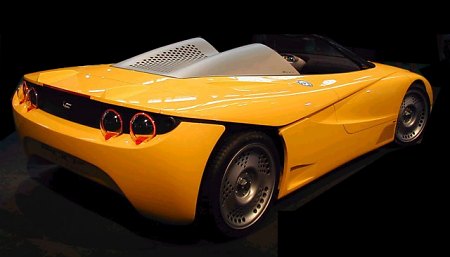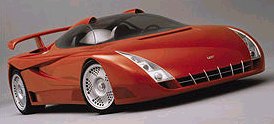
Corvette
From the
beginning, one of the core values of AutoZine is talking about and
comparing
cars from 3 continents. Now the site is coming to an end and I'd like
to
have a conclusion about this topic. Let me take Corvette, 911 and
Skyline
as examples, not only because they are my front-page cars but also
because
they represent the spirits and traditions of the USA, Europe and Japan
respectively.
It is quite
unbelievable
that the C5 Corvette is still built on the same format as muscle cars
30
years ago, most notably is the big pushrod V8. Well, what else can
characterise
American performance cars ? For a company having no tradition at all,
GM's
preference of pushrod V8 for Corvette is mostly due to cost reasons.
You
know, when the Cadillac had already got multi-valve V8s as standard,
the
C5 still developed the pushrod LS1 engine because the profit margin of
Vette used to be very slim and the volume is not as big as perceived -
although the Vette is the dream car of every American boys and engages
a lot of covering pages of American car magazines, annual sales is just
around 33,000 units, or double of the exclusive-feeling Porsche 911.
Mercedes
builds more high profit SLK than it.
 Production cost and
development
budget used to limit the success of Vette. While performance per
dollar is still unmatchable, handling used to be Corvette's weakest
aspect.
Remember American magazines compared the C4 with Japanese rivals like
Supra,
300ZX and gen III RX-7 ? every occasion the Vette won in grip but lost
in steering, balance, transmission and of course ride comfort. The C5
is
much better, but hardly called as a winner. Its steering and shift
quality
still lag behind the best of the world. The Getrag gearbox can get
overheated
for continuous hard use. The plastic and fit & finish of interior
is
the poorest.
Production cost and
development
budget used to limit the success of Vette. While performance per
dollar is still unmatchable, handling used to be Corvette's weakest
aspect.
Remember American magazines compared the C4 with Japanese rivals like
Supra,
300ZX and gen III RX-7 ? every occasion the Vette won in grip but lost
in steering, balance, transmission and of course ride comfort. The C5
is
much better, but hardly called as a winner. Its steering and shift
quality
still lag behind the best of the world. The Getrag gearbox can get
overheated
for continuous hard use. The plastic and fit & finish of interior
is
the poorest.
Using the budget
to enhance
performance instead of refinement is the philosophy of this car as well
as many American performance cars. However, I can't help praising the
work
done by the C5 considering the budget it got. While the pushrod V8
sounds
old, it can amaze European by its compactness and lightweight. It's
powerful,
torquey and maybe not as thirsty as we believed. It let us rethinking
why
we need multi-valve and smaller capacity at extra cost ... anyway, the
development potential of the LS1 is limited, so is the days lying
beyond
pushrod engines. Without multi-valve and variable valve timing,
pushrodder
will not be able to keep pace with the progress of modern engines. Even
GM's trucks are switching to a 24-valve inline-6 with VVT and variable
intake. Who else is still in favour of pushrod ?
 While pushrod V8 may
die in
the next decade (although unlikely to happen in the 2003 new Corvette),
the Vette will live forever. It is still the symbol of American sports
cars. I have no doubt that it will continue to be superfast, cheap and
unrefined. That's good to all over the world, as we don't need another
911 or Skyline.
While pushrod V8 may
die in
the next decade (although unlikely to happen in the 2003 new Corvette),
the Vette will live forever. It is still the symbol of American sports
cars. I have no doubt that it will continue to be superfast, cheap and
unrefined. That's good to all over the world, as we don't need another
911 or Skyline. |

911
While American
sports cars are
designed base on market analysis, European sports car specialists are
usually
driven by engineers’ passion and perhaps the will of a few legendary
masters,
namely Enzo Ferrari, Ferry Porsche, Colin Chapman, Ferdinand Piech etc.
Therefore European sports cars have strong characters - no matter
strength
or flaws. Every marque has its own persistence in a unique philosophy,
say, Ferrari persists in V12, Porsche 911 persists in flat-six, Lotus
must
be lightweight, Morgan is wooden frame .... now you may say most of
such
persistence have been sacrificed for customer needs, but European car
makers
manage to retain their traditional character in a new packaging,
because
they care about traditions and image.
Take the 911 as
an example.
From the first one in 1964 to the latest 996 Turbo, everything has been
changed but one can easily tell you both of them comes from the same
breed.
The evolutionary shape is one of the main reasons. In the 60s, the
frog-eyes
headlights were deemed to be a functional rather than artistic design,
but once they became the symbol of 911, they were retained, evolved and
enhanced gradually. Yes, gradually. While Japanese cars change styling
completely for every generation, European cars deliberately retain the
spirit of the old styling as much as possible, though every generation
modernize a bit. In this way, the frog-eyes of 911, double-kidney
grilles
of BMW and Ferrari’s wave shoulder line are printed deep in our memory.
 In R&D, European
sports
cars specialists are far more radical than US opponents, because they
know
strong image depends on engineering excellence rather than styling. GM
might be the father of automotive styling (Harley Earl restyled all GM
cars every model year), but it doesn’t understand engineering is the
decisive
factor for building a strong marque, therefore Cadillac Allante failed.
On the contrary, Porsche spent a lot of money to research and develop
engine
technology, Tiptronic, 4-wheel drive, PSM stability control,
aerodynamics,
ceramic brakes .... a lot of time spent to test and tune the cars in
Nurburgring
the big ring, a lot of attention to quality of material and selection
of
suppliers. This is hardly believable for a car maker so small in
production
volume - last year around 30,000 cars built. How can it find the
development
budget ? The answer is to sell cars at premium price. A 911 might cost
less than double of a Corvette, but the resultant profit margin is
several
folded. Therefore Porsche can afford a high percentage of engineering
cost.
The real question is how to sell so many premium 911s. The answer is
again
strong image. You see, the establishment of image depends on the
quality
of product. Once the image is improved, price could be raised to lift
the
quality of product again. The success of Porsche and Ferrari are the
result
of such long-term accumulation.
In R&D, European
sports
cars specialists are far more radical than US opponents, because they
know
strong image depends on engineering excellence rather than styling. GM
might be the father of automotive styling (Harley Earl restyled all GM
cars every model year), but it doesn’t understand engineering is the
decisive
factor for building a strong marque, therefore Cadillac Allante failed.
On the contrary, Porsche spent a lot of money to research and develop
engine
technology, Tiptronic, 4-wheel drive, PSM stability control,
aerodynamics,
ceramic brakes .... a lot of time spent to test and tune the cars in
Nurburgring
the big ring, a lot of attention to quality of material and selection
of
suppliers. This is hardly believable for a car maker so small in
production
volume - last year around 30,000 cars built. How can it find the
development
budget ? The answer is to sell cars at premium price. A 911 might cost
less than double of a Corvette, but the resultant profit margin is
several
folded. Therefore Porsche can afford a high percentage of engineering
cost.
The real question is how to sell so many premium 911s. The answer is
again
strong image. You see, the establishment of image depends on the
quality
of product. Once the image is improved, price could be raised to lift
the
quality of product again. The success of Porsche and Ferrari are the
result
of such long-term accumulation.

|
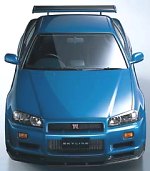
Skyline
In contrast,
Japanese car makers
have the tradition of "no tradition". Although they have some of the
world’s
longest serving name plates, say, Toyota Crown, they change everything
ground up every generation. This is because they are more market
sensitive
than self-confident. Another reason is that they are hard working -
while
European cars usually serve for 7 years with a mid-life facelift,
Japanese
used to launch new generation every 4 years. (Maybe a bit longer now
because
of recession)
They stunned the
world times
to times by demonstrating their ability to beat the Western even
without
any experience. 240Z, MR2, Lexus LS400, 300ZX, MX-5, NSX, Skyline GT-R,
S2000, Yaris ... when they decide to make a world class machine,
nothing
can stop them. The European might take 20 years to do so, the American
might say impossible from the very beginning, the Japanese do it in one
night - in fact, a lot of nobody-know sleepless nights. They are
hardworking,
serious and care about details. This explain why they build the world’s
most reliable cars. The English don’t know what quality is. The Italian
ignore quality. The German talk about quality. Only the Japanese carry
out quality.
Compare with the
European,
Japanese is even more technology-fancy. The Skyline, for example, has
all
the most sophisticated technology that the Western can’t imagine, such
as computer-control multi-plate clutch 4-wheel drive and computer
4-wheel
steering which implement the most adequate understeering /
oversteering.
Whenever European pioneer a new technology, the Japanese will follow
very
soon and further enhance it. Whenever the Japanese made a technology
standardize,
the European may take 5 or 10 years to match. Examples are multi-valve
engines and 4-wheel drive (now nearly all Japanese new cars have it as
option).
Versus Big Three,
Japanese
car makers found the USA market is their promised land. They achieved
double-figure
growth annually, took the first 2 places of car sales chart with Camry
and Accord, established luxury arms there. They dominated the
compact-size
segment, then the largest selling mid-size segment. Where the Big Three
left, they engaged that market. Where the Big Three is concentrating
(i.e.
SUV), they are gearing up to challenge. So, against the Japanese, Big
Three
seem now in a danger zone. Once the SUV love affair dry out, they will
find difficult to go back.
The disadvantage
of Japanese
cars used to be lack of character and boring handling. However, since
the
GT-R, many Japanese performance cars were tuned in Europe, such as
Lexus
IS200. Some may even be styled by foreign designers, such as Yaris. The
combined effort of Japanese and European has been proved to be world
beating
- Japanese reliability, technology and value for money, Euro-style
handling
and look.
The problem for
Japanese
cars remains to be lack of tradition. That’s not good to them because
they
can’t enjoy premium price due to accumulated image, but benefit real
car
lovers, as we can enjoy superior cars at bread-and-butter price.
Corvette, 911 and
Skyline,
all are interesting cars to me despite of different philosophies behind
them. I hope they will be long live forever and never be ruined by
globalization.
- Mark Wan, 14
July 2000.
|



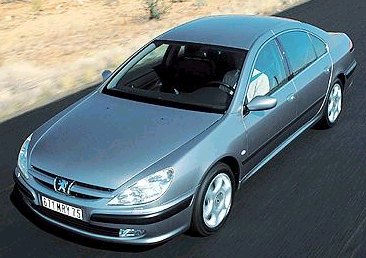 If
problems exist, denying them can just make things worse. Mercedes
denied
the roll over risk of A-class. Audi denied TT’s high speed instability.
What were the outcome ? Even though everybody knew the problems were
trivial,
the public is always willing to see the deceivers fail and apologize.
This
is just the basic psychology.
If
problems exist, denying them can just make things worse. Mercedes
denied
the roll over risk of A-class. Audi denied TT’s high speed instability.
What were the outcome ? Even though everybody knew the problems were
trivial,
the public is always willing to see the deceivers fail and apologize.
This
is just the basic psychology.